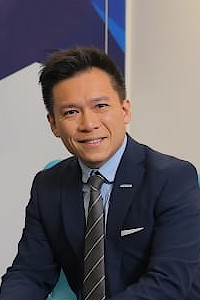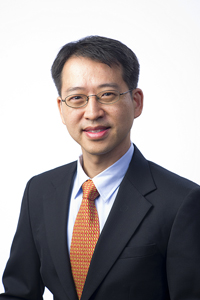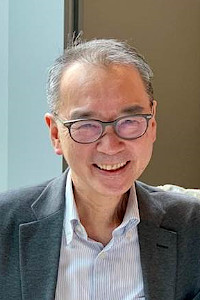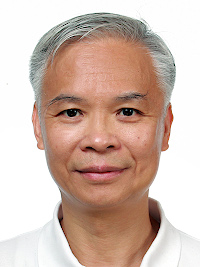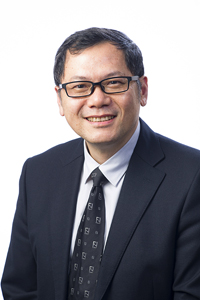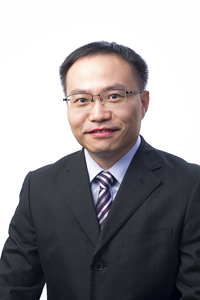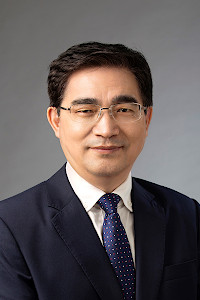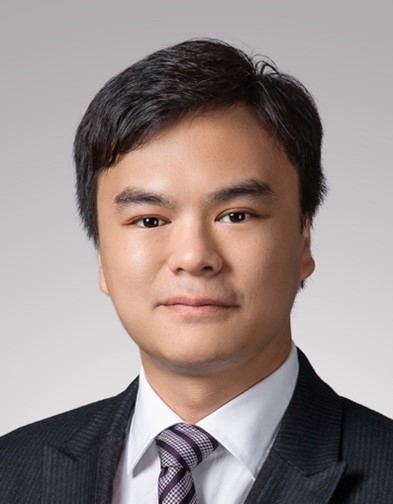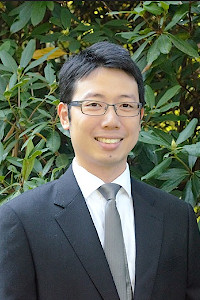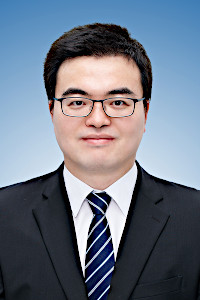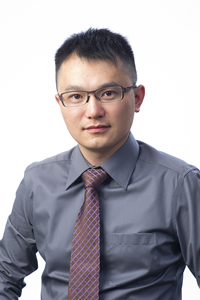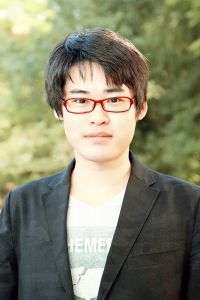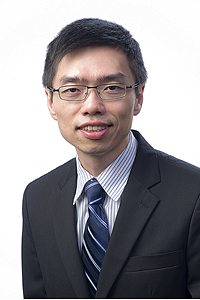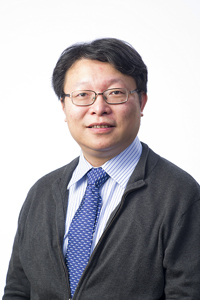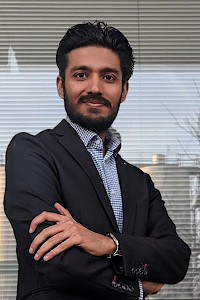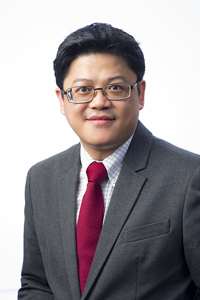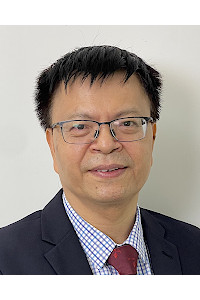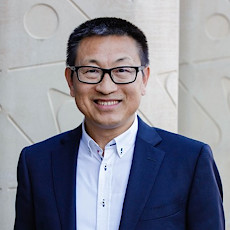






Dr. Mark WENIG

Dr. Rer. Nat. (Doctor of natural sciences, equivalent to PhD), Interdisciplinary Center for Scientific Computing and Institute for Environmental Physics, Ruprecht-Karls-Universität Heidelberg, Germany.

Associate Professor (School of Energy and Environment)

Dr. Mark WENIG

Contact Information

Office: School of Energy and Environment, City University of Hong Kong
2/F, Harbour View 2, 16 Science Park East Avenue, Hong Kong Science Park, Shatin, N.T., Hong Kong, CHINA
Phone: +(852)-3442-4676
Fax: +(852)-2319-5927
Email: mark.wenig@cityu.edu.hk
Web: Air Quality Research Group

Research Interests

  • Remote Sensing and Air Pollution Monitoring
  • Spectroscopic Satellite Measurements
  • Radiative Transfer Simulation
  • Digital Image Processing

Profile:

  • Diplom-Vorprüfung in Physik (Intermediate diploma in physics, comparable to BSc), Westphälische Wilhelms-Universität Münster, Germany, 1995
  • Diplom-Physiker (graduate physicist, equivalent to MSc), Ruprecht-Karls-Universität Heidelberg, Germany, 1998
  • Dr. Rer. Nat. (Doctor of natural sciences, equivalent to PhD), Interdisciplinary Center for Scientific Computing and Institute for Environmental Physics, Ruprecht-Karls-Universität Heidelberg, Germany, 2001
  • Post - Doctoral Research Scientist at Heidelberg University, Germany, 2001-2002
  • Assistant Research Scientist at NASA Goddard Space Flight Center, USA, 2002-2007
  • Assistant Professor at the Laboratory for Atmospheric Research at the Department of Physics and Material Sciences since August 2007 and at the School of Energy and Environment, City University of Hong Kong, since September 2009
Profile

Research Interests

My research focuses on the remote sensing of air pollutants and other atmospheric parameters with the aim to further the understanding of the anthropogenic impact on the environment, especially the climate system and the atmospheric composition. The research activities of me and my group consists of several research areas with this common goal including ground based and satellite based differential optical absorption spectroscopy (DOAS) measurements for air pollution monitoring, radiometer measurement for aerosol studies, radiative transfer modeling, chemical transport simulations and digital image processing.

Research

Honors

  • NASA Group Achievement Award for work done on the INTEX-B/MILAGRO field campaign in 2006
  • Awarded a National Research Council scholarship to work at NASA Goddard Space Flight Center, Atmospheric Chemistry and Dynamics Branch
  • 1st place at the international parallel programming contest Gridwars, awarded with a HP Computer Cluster
  • Received a Scholarship to the Graduate Research Program "Modeling and Scientific Computing in Mathematics and Natural Sciences", Interdisciplinary Center for Scientific Computing, Heidelberg, Germany

My teaching philosophy

I believe that there are two main motivating factors for students to acquire knowledge. The first factor is the students’ interest in the topic itself. Realizing that learning enables them to reach their personal and occupational goals in the future is the second motivating factor.

According to my teaching philosophy, it is my responsibility to make the learning process interesting for the students and to help them understand that acquiring knowledge is the path to the future they envision for themselves. My mission as a teacher is to guide students in the direction they need to take to find answers and solve problems by providing them with the essential information they need to do so. Furthermore, I want to be a mentor for the students, who is able to assist them when they need to make decisions on their curriculum in order to reach their personal academic and career goals in the best way possible.

At the same time, I want to encourage independent and creative thinking in order to solve problems. While teaching at CityU, I learned that students often have the ability to solve a problem only after I rephrase the problem in such a way that they can relate to it. Even though in my lectures I provide the students with all the tools they need to solve the problems they are presented with, they sometimes lack the motivation to do so. Instead of simply providing answers, I try to lead the students step by step towards the correct conclusions and answers. Most of the time it is sufficient on my part to point out analogies to questions in the students’ area of interest to enable them to find the answer to a problem. I experienced a similar situation while working as a laboratory instructor for graduate students in Heidelberg, Germany. Whenever something unexpected happened during the course of an experiment, the students’ first reaction would be to turn to me for an explanation. Instead of simply telling them the reason, I would guide them through the process of finding the answer. The fact that this method works so effectively has led me to believe that I can do the same in my lectures. After each segment of a lecture I insert a small pause where students can ask questions. Again, I try to provide guidance for them to answer their own questions. My hope is that this will give them sufficient confidence in their abilities to draw their own conclusions. Independent thinking is essential to the development of each student. Being able to come up with unique ideas independently to solve problems will serve them both inside and outside of the classroom. This approach is a good means to measure my effectiveness as a teacher.
Atmospheric sciences are a research area that is constantly evolving. With the launch of more and more satellites into orbit, an increasingly large amount of data relevant for atmospheric research is being produced. At the same time, constantly improving computer power allows transport models to simulate atmospheric processes in greater detail than ever before.

The fundamental processes and ideas in the field, however, appear over and over again as solutions to new problems. Because of this, I believe that teaching atmospheric sciences is a careful balancing act that requires putting the latest developments in the field in the context of the foundations of the discipline. I believe that adding the newest scientific discoveries to my lectures will motivate the students to learn the fundamentals. This way they learn to appreciate the connections between the abstract and the applied, enabling them to see that those fundamentals might form the foundation for their own discoveries.

Most of the tools used in atmospheric sciences are used in other research areas as well, e.g. optimizations algorithms, Monte Carlo simulations and digital image processing techniques. Learning these fundamentals can be made much more interesting for the students if the get to work in a group environment. Group interaction is an important part of learning. Being able to share ideas, validate them with those of others, and work as a team are important processes in social and mental development. I am currently planning several student research projects where the students have to work together in order to achieve a certain goal. The goal does not necessarily have to be limited to atmospheric sciences, e.g. I set up a robot soccer team with the aim of teaching the students to program robots so that they can scan their environment using cameras, detect objects and landmarks and eventually participate in a soccer game. The competitive nature of soccer games serves as motivation for the students to apply and deepen the image processing knowledge they acquired in my lecture. The students who participated in this project were highly motivated to learn how to program robots and exceeded the class’s requirements by far. After the students had solved the problems I presented them with, they were always amazed when I told them that they had at the same time solved similar problems in satellite image processing.

When teaching I like to make use of the different kinds of technology available nowadays. Audio-visual aids, e.g. the use of power point slides for lectures, providing hand outs, and showing video clips to emphasize important points are effective learning tools with proven impacts.

I love being a professor in the field of atmospheric science. I'm working in my preferred area of research where I have the opportunity to influence students in a positive manner. I strive to excite and cultivate the students' interest in the discipline while exposing them to the fundamentals of atmospheric sciences in order to prepare them for a lifetime of learning and for success beyond academics.

List of peer-reviewed publications

Scientific journals

  • Wenig, M., K. Pang and P. On, Arbitrarily Colored Ball Detection Using the Structure Tensor Technique, special issue on Advances in intelligent robot design for the Robocup Middle Size League, Mechatronics 21 (2011) 367–372, doi:10.1016/j.mechatronics.2010.07.005, 2011
  • Halla, J. D., Wagner, T., Beirle, S., Brook, J. R., Hayden, K. L., O'Brien, J. M., Ng, A., Majonis, D., Wenig, M. O., and McLaren, R.: Determination of tropospheric vertical columns of NO2 and aerosol optical properties in a rural setting using MAX-DOAS, Atmos. Chem. Phys. Discuss., 11, 13035-13097, doi:10.5194/acpd-11-13035-2011, 2011
  • Lee, Y.C., Mark Wenig, Dave Larko, Zhenxi Zhang and Thomas Diehl, Dust episodes in Hong Kong (south China) and their relationship with the Sharav and Mongolian cyclones and jetstreams, accepted at Air Quality, Atmosphere and Health, DOI: 10.1007/s11869-011-0134-7, 2010
  • Lee, Y.C., Xun Yang and Mark Wenig, Transport of Dusts from East Asian and non East Asian Sources to Hong Kong During Dust Storm related Episodes/Events 1996-2007, doi: 10.1016/j.atmosenv.2010.03.034, Atmospheric Environment, 2010
  • Russell, A., L. Valin, E. Bucsela, M. Wenig, R. Cohen, Space-based Constraints on Spatial and Temporal Patterns of NOx Emissions in California, 2005-2008, Environ. Sci. Technol., 44 (9), pp 3608–3615, DOI: 10.1021/es903451j, 2010
  • Yang, X. and Wenig, M., Study of columnar aerosol size distribution in Hong Kong, Atmos. Chem. Phys., 9, 6175-6189, 2009
  • Lee, Y.C., Mark Wenig, and Xun Yang, The Emergence of Urban Ozone Episodes in Autumn and Air Temperature Rise in Hong Kong, Air Quality, Atmosphere and Health, 2:111–121, DOI 10.1007/s11869-009-0038-y, 2009
  • Wenig, M. O. , A. M. Cede, E. J. Bucsela, E. A. Celarier, K. F. Boersma, J. P. Veefkind, E. J. Brinksma, J. F. Gleason, and J. R. Herman, Validation of OMI tropospheric NO2 column densities using direct-Sun mode Brewer measurements at NASA Goddard Space Flight Center, J. Geophys. Res., 113, D16S45, doi:10.1029/2007JD008988, 2008
  • Boersma,K.F., D.J. Jacob, E.J. Bucsela, A.E. Perring, R. Dirksen, R.J. van der A, R.M. Yantosca, R.J. Park, M.O. Wenig, T.H. Bertram, R.C. Cohen, Validation of OMI tropospheric NO2 observations during INTEX-B and application to constrain NOX emissions over the eastern United States and Mexico, Atmospheric Environment, doi:10.1016/j.atmosenv.2008.02.004, 2008
  • Bucsela, E.J., A.E. Perring, R.C. Cohen, K.F. Boersma, E.A. Celarier, J.F. Gleason, M.O. Wenig, T.H. Bertram, P.J. Wooldridge, R. Dirksen, J.P. Veefkind, Comparison of tropospheric NO2 from in situ aircraft measurements with near-real-time and standard product data from OMI, J. Geophys. Res., 113, D16S31, doi:10.1029/2007JD008838, 2008.
  • E. A. Celarier, E. J. Brinksma, J. F. Gleason, J. P. Veefkind, A. Cede, J. R. Herman, D. Ionov, F. Goutail, J-P. Pommereau, J-C. Lambert, M. van Roozendael, G. Pinardi, F. Wittrock, A. Schönhardt, A. Richter, O. W. Ibrahim, T. Wagner, B. Bojkov, G. Mount, E. Spinei, C. M. Chen, T. J. Pongetti, S. P. Sander, E. J. Bucsela, M. O. Wenig, D. P. J. Swart, H. Volten, M. Kroon, and P. F. Levelt, Validation of Ozone Monitoring Instrument Nitrogen Dioxide Columns, J. Geophys. Res., 113, D15S15, doi:10.1029/2007JD008908, 2008
  • Grzegorski, M., M. Wenig, U. Platt, P. Stammes, N. Fournier, T. Wagner, The Heidelberg iterative cloud retrieval utilities (HICRU) and its application to GOME data, Atmospheric Chemistry and Physics, Vol. 6 pp 4461-4476, 2006
  • Kunhikrishnan, T., M. G. Lawrence, R. von Kuhlmann, M. O. Wenig, A. Richter and J. P. Burrows, Regional NOx emission strength for the Indian subcontinent and the impact of emissions from India and neighboring countries on regional O3 chemistry in light of seasonal meteorology, J. Geophys. Res., Vol. 111, No. D15, D15301, 2006
  • Beirle, S., N. Spichtinger, A. Stohl, K. Cummins, T. Turner, D. Boccippio, O. R. Cooper, M. Wenig, M. Grzegorski, U. Platt, T. Wagner, Estimating the NOx produced by lightning from GOME and NLDN data: a case study in the Gulf of Mexico, Atmospheric Chemistry and Physics, Vol. 6, pp 1075-1089 , 2006
  • Bucsela, E. J., E. A. Celarier, J. F. Gleason, M. O. Wenig, J. P. Veefkind, K. F. Boersma, and E. Brinksma, Algorithm for NO2 vertical column retrieval from the Ozone Monitoring Instrument, IEEE Trans. Geo. Rem. Sens., Vol. 44, No. 5, 1245-1258, 2006
  • Wenig, M. , B. Jähne, and U. Platt, Operator representation as a new differential optical absorption spectroscopy formalism, Applied Optics, Vol. 44, No. 16, pp. 3246-3253, 2005
  • Irie, H., K. Sudo, H. Akimoto, A. Richter, J.P. Burrows, T. Wagner, M. Wenig, S. Beirle, Y. Kondo, V.P. Sinyakov, and F. Goutail, Evaluation of long-term tropospheric NO2 data obtained by GOME over East Asia in 1996-2002, GRL Vol. 32, L11810, 2005
  • Beirle, S., U. Platt, R. von Glasow, M. Wenig, and T. Wagner, Estimate of nitrogen oxide emissions from shipping by satellite remote sensing, Geophys. Res. Lett., 31, L18102, doi:10.1029/2004GL020312, 2004
  • Wenig, M. , S. Kühl, S. Beirle, E. Bucsela, B. Jähne, U. Platt, J. Gleason, and T. Wagner, Retrieval and Analysis of Stratospheric NO2 from GOME, J. Geophys. Res., Vol.109, D04315, 2004.
  • Beirle, S., U. Platt, M. Wenig, and T. Wagner, Highly resolved global distribution of tropospheric NO2 using GOME narrow swath mode data, Atmospheric Chemistry and Physics, Vol. 4, 1913-1924, 2004
  • Hollwedel, J, M. Wenig, S. Beirle, S. Kraus, S. Kühl, W. Wilms-Grabe, U. Platt, and T. Wagner, Year-to-Year Variations of Polar Tropospheric BrO as seen by GOME, Adv. Space Res., 804-808, 2004
  • Beirle, S., U. Platt, M. Wenig, and T. Wagner, NOX production by lightning estimated with GOME, Adv. Space Res., 793-797, 2004
  • Wenig, M. , N. Spichtinger, A. Stohl, G. Held, S. Beirle, T. Wagner, B. Jähne, and U. Platt, Intercontinental transport of a power plant plume of nitrogen oxides. Atmos. Chem. Phys. 3, 387-393, 2003.
  • Stohl, A., H. Huntrieser, A. Richter, S. Beirle, O. R. Cooper, S. Eckhardt, C. Forster, P. James, N. Spichtinger, M. Wenig, T. Wagner, J. P. Burrows, and U. Platt, Rapid intercontinental air pollution transport associated with a meteorological bomb. Atmos. Chem. Phys. 3, 969-985, 2003.
  • Beirle, S., U. Platt, M. Wenig, and T. Wagner, Weekly cycle of NO2 by GOME measurements: a signature of anthropogenic sources, Atmospheric Chemistry and Physics, Vol. 3,2225-2232, 2003.
  • Wagner, T., F. Wittrock, A. Richter, M. Wenig, J.P. Burrows, and U. Platt, Continuous monitoring of the high and persistent chlorine activation during the Arctic winter 1999/2000 by the GOME instrument on ERS-2. J. Geophys. Res., 0.1029/2001JD000466, 2002.
  • Wagner, T., C. von Friedeburg, M. Wenig, C. Otten, and U. Platt, UV/vis observations of atmospheric O4 absorptions using direct moon light and zenith scattered sunlight under clear and cloudy sky conditions, J. Geophys. Res., VOL. 107, NO. D20, 4424, 2002.
  • Leue, C., M. Wenig, T. Wagner, O. Klimm, U. Platt, and B. Jähne, Quantitative analysis of NOx emissions from Global Ozone Monitoring Experiment satellite image sequences. J. Geophys. Res., 106, D6:5493-5505, 2001.
  • Spichtinger N., M. Wenig, P. James, T. Wagner, U. Platt, and A. Stohl, Satellite detection of a continental-scale plume of nitrogen oxides from boreal fires, Geophys. Res. Lett., 29, 4579-4583, 2001.
  • Velders, G. J. M., C. Granier, R. W. Portmann, K. Pfeilsticker, M. Wenig, T. Wagner, U. Platt, A. Richter, and J. P. Burrows. Global tropospheric NO2 column distributions: Comparing 3-D model calculations with GOME measurements. J. Geophys. Res., D 106:12643-12660, 2001.
  • Wagner, T., C. Leue, M. Wenig, K. Pfeilsticker, and U. Platt, Spatial and temporal distribution of enhanced boundary layer BrO concentrations measured by the GOME instrument aboard ERS-2. J. Geophys. Res., 106, 24225-24236, 2001.
  • Wagner, T., D.W. Arlander, A. Richter, M. Weber, K. Bramstedt, K.-U. Eichmann, F. Wittrock, M. Wenig, J. P. Burrows, and U. Platt, Rekord-Ozonverlust im arktischen Winter 1999/2000 Satellitendaten zeigen starke stratosphärische Chloraktivierung über der Arktis. Ozonbulletin des Deutschen Wetterdienstes, 73, 2000.
  • Leue, C., M. Wenig, B. Jähne, and U. Platt, Globale Biomassenverbrennung und Industrieemissionen, Physik in unserer Zeit, 4(D4787):179, 1998.
  • Leue, C., M. Wenig, B. Jähne, and U. Platt, Quantitative Observation of Biomass-Burning Plumes from GOME. Earth Observation Quarterly, 58:33-35, 1998.

Chapters in collective volumes

  • Beirle, S., U. Platt, T. Wagner, M. O. Wenig, J. F. Gleason, Weekly Cycle of Nitrogen Dioxide Pollution from Space, In: Our Changing Planet ?The view from Space, Cambridge University Press, pp 74-77, 2007
  • Wenig, M. , C. Leue, S. Kraus, T. Wagner, U. Platt, and B. Jähne, Emission, Transport, and Fate of Tropospheric Trace Gases, In: Image Sequence Analysis to Investigate Dynamic Processes, Lecture Notes in Computer Science, Springer, chapter 15, accepted 2007.
  • Beirle, S., U. Platt, T. Wagner, M. Wenig and J. Gleason, Weekly Cycle of Nitrogen Dioxide Pollution from Space, In: Our Chamging Planet: The View from Space, pp 74-77, in press 2007
  • Kraus, S., K. Degreif, N. Smoljar, M. Korniyenko, R. Kalkenings, T. Wagner, M. Wenig, B. Jähne, and U. Platt, Spectroscopic Imaging, In: Image Sequence Analysis to Investigate Dynamic Processes, Lecture Notes in Computer Science, Springer, chapter 5, accepted 2007.
  • Wenig, M. , T. Wagner, U. Platt, and B. Jähne, Construction and Analysis of Image Sequences of Atmospheric Trace Gases. In: P Borrell, editor, Sounding the Troposphere from Space: A New Era for Atmospheric Chemistry, pages 251-255, Springer, London, 2003.
  • Stohl, A., N. Spichtinger, S. Beine, M. Wenig, T. Wagner, and U. Platt, Determination of NOx Sources by Combination of Satellite Images with Transport Modelling. In: P Borrell, editor, Sounding the Troposphere from Space: A New Era for Atmospheric Chemistry, pages 271-281, Springer, London, 2003.
  • Wagner, T., A. Richter, C. von Friedeburg, M. Wenig, and U. Platt, Case Studies for the Investigation of Cloud Sensitive Parameters as Measured by GOME. In: P Borrell, editor, Sounding the Troposphere from Space: A New Era for Atmospheric Chemistry, pages 199-210, Springer, London, 2003.
  • Wenig, M. , C. Leue, S. Kraus, T. Wagner, U. Platt, and B. Jähne, Image Sequence Analysis of Satellite NO2 Concentration Maps. In B. Radig and S. Florczyk, editors, Lecture Notes in Computer Science - Pattern Recognition, pages 223-230. Springer, Berlin, 2001.
  • Wenig, M. and C. Leue, Cloud Classification Analyzing Image Sequences, In B. Jähne and Haußäcker, editors, Handbook of Computer Vision and Applications, chapter A22, pp. 652f. Academic Press, London, 2000.
  • Leue, C., M. Wenig, and U. Platt, NOx Emissions Retrieved from Satellite Images Sequences, In B. Jähne and H. Haußäcker, editors, Computer Vision and Applications, chapter A23, pp. 654f. Academic Press, London, 2000.
  • Leue, C., M. Wenig, and U. Platt, Retrieval of Tropospheric NO2 Concentrations from Multispectral Image Sequences. In B. Jähne, H. Haußäcker, and P. Geißler, editors, Handbook of Computer Vision an Applications, volume 3, chapter 37, page 783. Academic Press, London, 1999.

Other

  • Wenig, M. , Satellite Measurement of Long-Term Global Tropospheric Trace Gas Distributions and Source Strengths - Algorithm Development and Data Analysis. Ph.D. Thesis, University of Heidelberg, 2001.
  • Wenig, M. , Wolkenklassifizierung mittels Bildsequenzanalyse auf GOME-Satellitendaten. Diplomathesis, Univ. Heidelberg, Heidelberg, Germany, 1998.


Last Update: October 2011