






Seminars

Seminar: Study of Extreme Weather Events and Climate Impact on Air Quality in U.S.


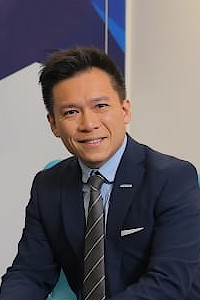
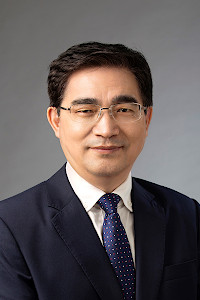
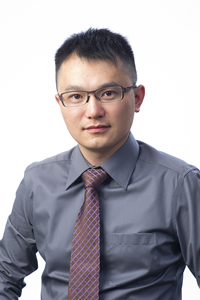
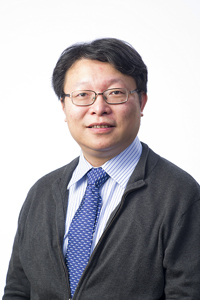
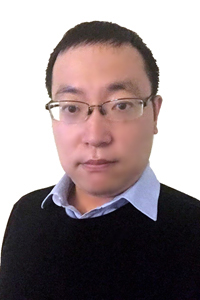
Dr. Joshua S. FU

Associate Professor
Department of Civil and Environmental Engineering
University of Tennessee


Abstract

Dynamical downscaling is a temporary technique commonly used to link global and regional models together before a new generation earth system model becomes available, by applying the initial and boundary conditions from global models as drivers in regional models. This technique takes advantage of more detailed topography and land use information than global models, resulting in high horizontal resolution simulations, typically ranging from 10 km to 50 km. This study is the first evaluation of dynamical climate downscaling using the Weather Research and Forecasting (WRF) Model on a 4km by 4km high resolution scale in the eastern US, driven by the Community Earth System Model (CESM). After downscaling, WRF results were evaluated with observations, showing statistically significant improvement over CESM in reproducing extreme weather events, including both heat waves and extreme precipitation.

To further investigate future changes of extreme weather events, the fossil fuel intensive scenario Representative Concentration Pathway (RCP) 8.5 was used to study a possible future mid-century climate extreme in 2057-2059. Both heat waves and extreme precipitation are more severe than present climate in the Eastern US. We also applied the dynamical chemistry downscaling to study climate impact on local air quality in U.S. under RCP scenarios.

About the Speaker

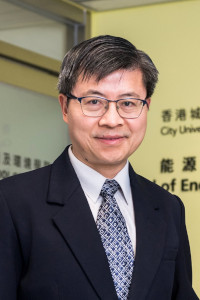
Dr. Joshua S. FU is an Inaugural Professor of the UT-ORNL Bredesen Center for Interdisciplinary Research and Graduate Education Energy Science and Engineering Ph.D. Program, Joint Faculty Appointment as senior scientist in the Computational Science and Mathematics Division at Oak Ridge National Laboratory, Faculty Affiliate at the Joint Institute for Computational Sciences, Honorary Professor of the Chinese Research Academy of Environmental Sciences and associate professor of Civil and Environmental Engineering at the University of Tennessee. The focus of Dr. Fu's research work includes climatic changes, environmental impact assessments, air pollution modeling, the impacts of extreme events on health, the impacts of transportation planning and energy usages on air quality, land use (satellite applications) and emissions, diesel track emission effects, and energy optimization planning.

Dr. Fu has served as a co-author of the Final Report of the Hemispheric Transport of Air Pollution for the United Nations Economic Commission for Europe and reviewing committee member for air quality status in East Asia for the East Asia Governments. He served as an international adviser/expert on East Asia/China air quality modeling assessment such as Beijing and Shanghai air quality modeling assessment for the 2008 Olympic Games and 2010 Shanghai World Expo, modeling lead of the Model Intercomparison Study (MIS-Asia). He develops and provides scientifically sound, cost-effective analysis tools to design and develop complex climate and environmental model applications. Currently, he is the PI for the Air Benefit and Attainment Assessment Cost System (ABaCAS). Dr. Fu obtained his Ph.D. from North Carolina State University, MS from UCLA and BS from Taiwan's National Cheng Kung University.

Date: 22 May 2013 (Wednesday)
Time: 11:00am. – 12:00nn.
Venue: G5315, 5/F, Academic 1,
City University of Hong Kong
Tat Chee Avenue
Kowloon
Hong Kong
Organizer:

School of Energy and Environment
City University of Hong Kong

Enquiry: see.enquiry@cityu.edu.hk

~All are Welcome~

Seminar: Using Photosynthetic Proteins for Electricity Generation


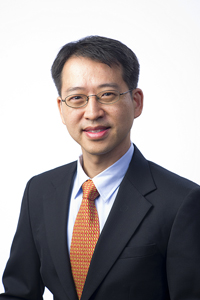
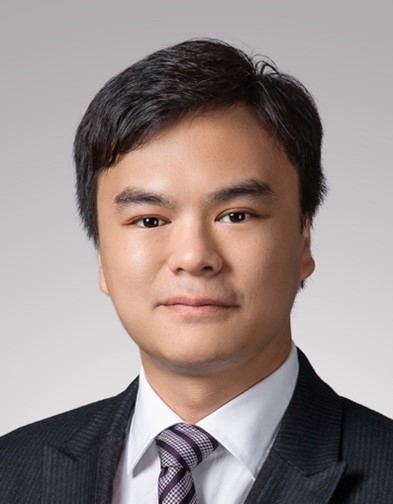
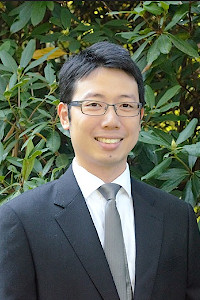
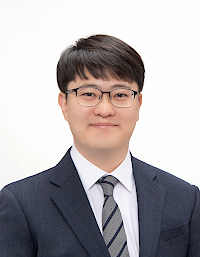
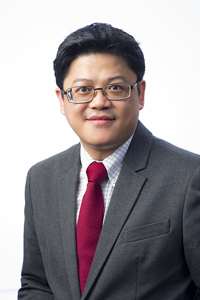
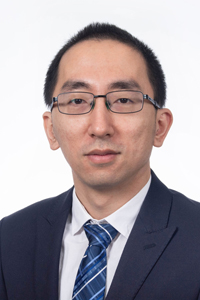
Dr. Swee Ching TAN

Postdoctoral Associate
Department of Materials Science and Engineering
Massachusetts Institute of Technology


Abstract

Mother nature has created a most sophisticated and efficient solar energy conversion system in plants, algae, and a variety of photosynthetic bacteria, whereby light energy is converted into chemical energy through a series of electron and proton transfer processes. The primary process of photosynthesis starts in a pigment-protein complex called the reaction center. The ability to understand how we could harvest the electrons produced during photosynthesis would help us to better design photovoltaic devices with higher conversion efficiency. The use of reaction center complexes from the purple bacterium Rhodobacter sphaeroides as light absorbing materials in relatively simple two-electrode photovoltaic devices will be described. In accord with the type of output of conventional solar cells based on doped silicon, photoactive dyes or polymer blends, the protein-based cells generated a conventional direct current (DC) in response to continuous illumination. However, when the excitation light was cut off the cells exhibited a transient reverse current, and modulation of the excitation light at a suitable frequency resulted in the generation of a novel alternating current (AC). The mechanisms through which these cells work, the origin of the open circuit voltage and reliability of such cells will be discussed.
About the Speaker

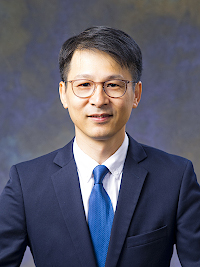
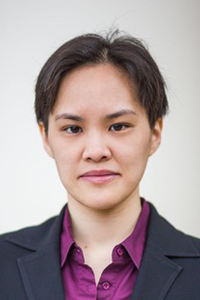
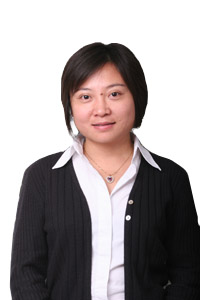
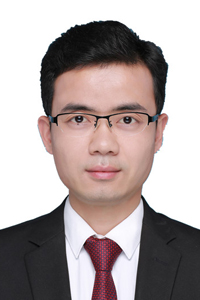
Dr. Tan Swee Ching received his Bachelor and Master's degrees in Physics from the National University of Singapore. He then worked in Hewlett Packard Singapore and Ireland as a Laser Process and Equipment engineer to develop new technology for silicon micromachining from 2004 to 2006. During his work in Hewlett Packard, he had made two major contributions which helped the company to reduce operation cost by at least US$400,000 per annum and to increase the throughput by 30% within his department. In October 2006 he gained PhD admission to University of Cambridge Electrical Engineering Department with Scholarships from Cambridge Commonwealth Trust and Wingate Foundations. His PhD work at the University of Cambridge was to use photosynthetic proteins as light absorbing materials for solar cells under the supervision of Professor Sir Mark Welland. After getting his PhD in 2010, he continued to stay in his PhD group working on a collaborative project with Professor Michael Gratzel on synthesizing ultra long Zinc Oxide Nanowires for an Organic Dye Sensitized Solar Cells. Dr Tan is currently a postdoctoral associate in the Department of Materials Science and Engineering of MIT working on AlGaN high electron mobility transistors.
Date: 20 May 2013 (Monday)
Time: 2:30 – 3:30pm
Venue: B5310, Academic 1
City University of Hong Kong
Tat Chee Avenue
Kowloon
Hong Kong
Organizer:

School of Energy and Environment
City University of Hong Kong

Enquiry: see.enquiry@cityu.edu.hk

~All are Welcome~

Seminar: A Miniaturized Microbial Fuel Cell: renewable & carbon-neutral energy converter


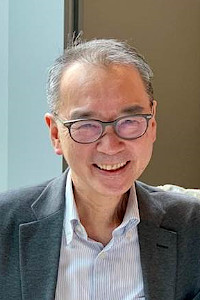
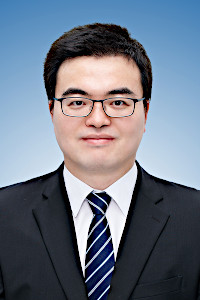
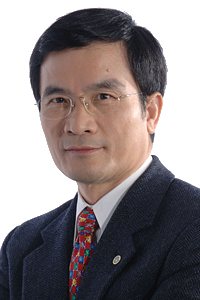
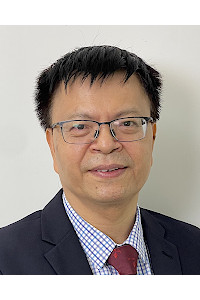
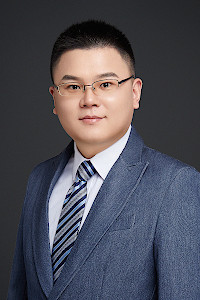
Dr. Junseok Chae,

School of Electrical, Computer and Energy Engineering, Arizona State University, United States


Abstract

A microbial fuel cell (MFC) is an electrochemical device that converts chemical energy of organic substrates into electricity through the metabolism of exoelectrogen, such as Geobacter species. Exoelectrogen oxidize organic substrates and then complete respiration by transferring the electrons to the anode via extracellular electron transfer (EET). Most MFCs are in macro-sized forms that serve as prototypes of large power sources or energy-efficient wastewater treatment technology. Recent activities are to miniaturize MFCs for portable power sources, as well as for studies of the behavior of individual exoelectrogen. When MFCs scales down, MEMS (Micro-Electro-Mechanical-Systems) and nano-technology becomes attractive primarily due to the potential of miniaturization, economical mass production, and large surface-area-to-volume ratio. Scaling law says by scaling down the characteristic length of a MFC the power performance enhances; however, the performance of previously reported miniaturized MFCs was far worse than that of macro-sized counterparts. The power density of miniaturized MFCs was up to four orders of magnitude lower than that of macro-sized MFCs (690 µW/cm2), ranging from 0.019 to 0.4 µW/cm2. Coulombic efficiencies (CE) of miniaturized MFCs were 0.03 to 14.7%, or approximately six times lower than that of macro-sized MFCs (10 to 85%). In this talk, we present a miniaturized MFC having a high power density (4.7 µW/cm2) and high CE (31%, by far the highest value among reported miniaturized MFCs). We also provide insight of using nanostructure materials to further enhance the MEMS MFC to be used for a portable power source.

About the Speaker

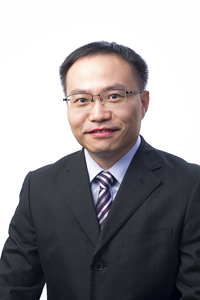
Dr. Junseok Chae received the B.S. degree in metallurgical engineering from the Korea University, Seoul, Korea, in 1998, and the M.S. and Ph.D. degrees in EECS (Electrical Engineering and Computer Science) from the University of Michigan, Ann Arbor, in 2000 and 2003, respectively. After a couple of years of being a research fellow at Michigan, he joined Arizona State University as an assistant professor in electrical engineering in 2005 and now he is an associate professor. His research areas of interest are MEMS for biomedical applications.

He received the 1st place prize and the best paper award in DAC (Design Automation Conference) student design contest in 2001. He has published over 100 journal and conference articles, one book, four book chapters, and holds two US patents. He serves as a technical program committee member of IEEE MEMS conference and He received NSF (National Science Foundation) CAREER award on MEMS protein sensor array.

Date: 10 April 2013 (Wednesday)
Time: 10:30 a.m. – 11:30 a.m.
Venue: P4302, 4/F.,
Academic 1 (AC1)
City University of Hong Kong
Tat Chee Avenue
Kowloon
Hong Kong
Organizer:

School of Energy and Environment
City University of Hong Kong

Registration: Please sign up at

https://cap.cityu.edu.hk/studentlan/postDetail.aspx?id=X09v4920p132403A617322

Enquiry:

Please contact Miss Winnie Lo via e-mail: winnie.aerc@cityu.edu.hk or tel: 3442 9693.

~All are Welcome~